Kilgarde

STUDIO

The Kilgarde Saga

The World Awaits

An illustrated chronicle of Kilgarde — and the lands that lie beyond its gates.

Scroll to begin

The Story Begins

Kilgarde

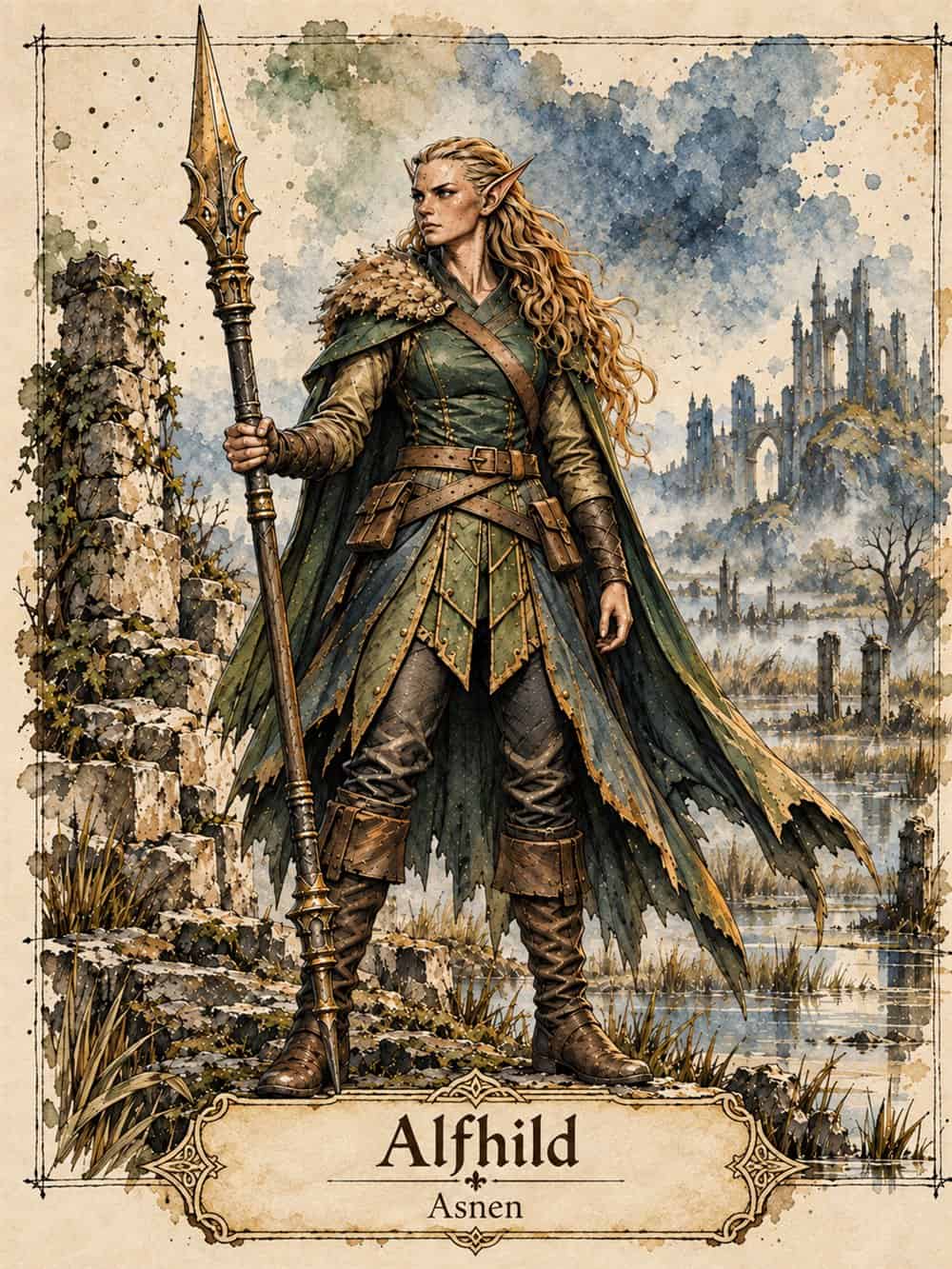
When the oath-torn elf Alfhild crosses the Silver Trail to a human fortress on the edge of ruin, she finds a world where stone remembers every promise broken. As darkness gathers in the marsh and the bells toll beneath the fog, one vow will decide whether Kilgarde endures—or is forgotten.

For those who hold until dawn.

Written & Illustrated by Kilgarde Studio

Begin Reading · Book I

Prologue

The wind came down the valley like a sigh through a broken bell. Long before dawn, the walls of Kilgarde waited—dark against the pale marsh light, unmoving except for the banners that stirred once, then hung still.

Alfhild rode alone. Her cloak, heavy with frost, dragged through the reeds. Behind her, the Silverwood slept, its branches veined with cold light, each limb etched in runes older than the memory of men. Before her stretched the world she had chosen—stone, smoke, and the labor of the fallen.

At the gate she dismounted. The guards did not speak; they only looked at her sigil, the sun-split mark upon her breastplate, and turned away. The oath she had broken was older than their fathers’ fathers. They knew her name from the songs, not from her voice.

She climbed the steps to the parapet. The bell rope hung stiff with ice, its shadow swaying across the wall like a pendulum counting breaths. Somewhere far below, water shifted beneath the stone. She laid her palm to the frozen rope.

“Hold,” she whispered.

A whisper became a breath, a breath a vow. The bell gave no sound, but the walls answered in their own tongue—a low hum, deep in the granite, like a heart remembering it once had blood.

And in that moment, as fog rolled from the marsh and light bled over the eastern rim, the siege began—not with trumpets or drums, but with a single promise remembered.

Chapter I — The Gatehouse

All things sink, save those that learn to breathe the mud.

The road south unfurled like a wet lash, every step a bargain with the fen. Patches of frost held where the sun could not reach; reeds leaned and whispered to one another, shaking their brown pennants when the wind worried them. Alfhild walked with her hand near her sword but not on it, saving heat, saving breath, counting the breaths aloud in her head so that the bog would not steal them unmarked.

Kilgarde showed itself first as smoke—straight columns rising from tarfires and chimneys—and then as the grey line of its wall, patched in new ashlar and old timber. From a distance it looked almost restful, as if it had settled into the marsh for a long nap and drawn a blanket of fog to its chin. Up close, rest did not live there.

Refugees had come ahead of her and huddled along the outer ditch, wrapped in every shabby shawl and sailcloth they possessed. A woman with a child under her coat stirred a pot of something thin that smelled of onion and brine. A saw rasped as a man cut planks from a door that had once belonged to a house with a name. Four boys carried stones in their arms like sullen cats and built a low berm where the ditch’s bank had slumped. The mud had borrowed everyone’s ankles and was in no hurry to return them.

When Alfhild reached the gate she stopped beneath the portcullis and lifted her head. Iron teeth hung there with rust around their mouths. The wood was swollen and scarred; the hinges spoke in a tired bass even when the wind touched them. On the right-hand post a human hand had carved something like a circle and crossed it with a line. The cut had weathered and filled with grime. It might have been a sun; it might have been a child’s game. To her eye, it wanted to be OATH and did not remember how.

“Hoy there,” called a voice from the parapet. “Elf, is it?”

She looked up. A man leaned on the crenel, his mail shirt glimmering like river-scale. He had the beard of a winter tree, twig-thin and stubborn. “It is,” she said.

“Come in if you’ve coin for tar and appetite for hard bread.” His tone softened as if he had meant to be cruel and forgot how. “And if you’ve a sword, show it. If you’ve two, lend one.”

“I have one,” she said, and shifted her cloak so the hilt’s pale metal caught light. “I lend it when I can.”

“Open,” the man called down, and the gate complained until it got its way. A smaller wicket within the great door unlatched, and Alfhild stepped through into the throat of the gatehouse, under timbers as thick as ox-backs and bristling with pegs.

Inside the yard the world was noise. Blacksmiths sang to keep their arm’s tempo; the bellows gasped like a hunted thing. A child ran with a bundle of kindling twice her height and laughed at nothing because laughter was lighter than wood. A tar pot bubbled; two men smeared the gates with brushes like mops. Dogs slept in the lee of a wagon and opened one eye when boots passed too close. The smell was of coal, brine, damp wool, and iron wet with breath.

He was waiting for her beyond the gatehouse throat—a broad-shouldered man whose leather jerkin had been mended in squares until it was more seam than skin. His hair was cut short to keep free of the windings of rope, and his eyes were the color of old oak water. He stood with his weight on the balls of his feet the way men do who expect news to strike. “You are Alfhild,” he said without making it a question.

“I am,” she answered.

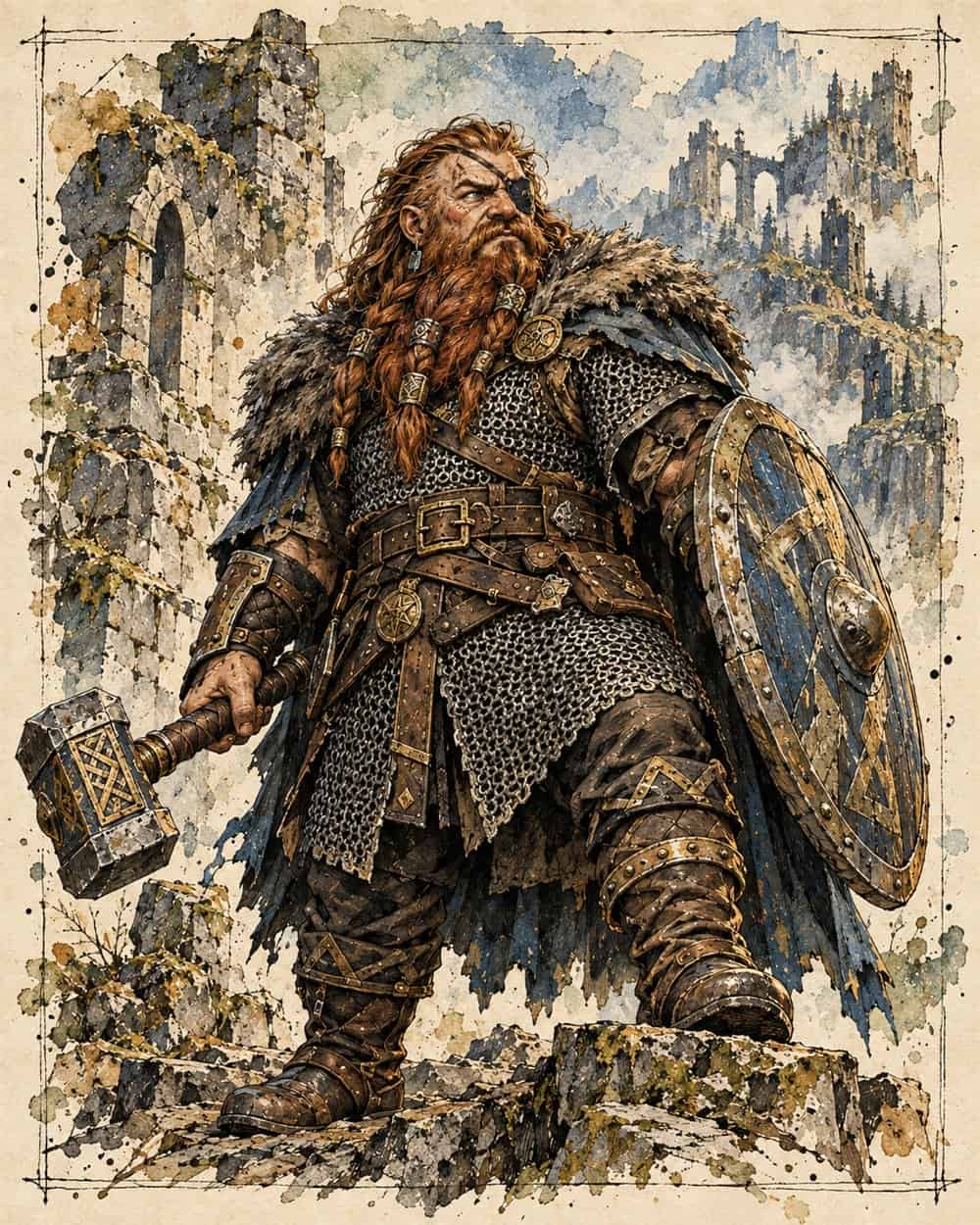
“I am Reeve Blackbriar.” He did not offer a hand. A reeve’s hands were busy elsewhere. “You found us by the road and not by rumor, which is decent. What do you want?”

“To give what I can keep giving,” she said. “And to keep what can be kept.”

He grunted—a sound that might have been approval had it not also been weary. “We count all gifts in logarithms now. They divide as soon as they touch air.” He nodded toward her sword. “The metal is good.”

“It holds an edge,” she said.

“Good. We could do with more things that hold.” He turned and began to walk; she matched his pace. “You come from the forest. They will not come with you.”

“No,” she said.

“Then I will not spend words on asking. We have nails to argue with, and nails speak clearer. Walk.”

They crossed the yard. Boys at the well drew water and spilled half of it on their boots. Two women rolled a barrel by setting their hands on it and remembering, together, how it had once been easy. A file of men in boiled leather pushed a staunchion cart; the cart’s front wheel clacked where an iron hoop had gone missing, and each clack seemed to argue with the next.

“The east ditch silts faster than we can shovel,” Blackbriar said. “The west wall settles an inch a month and pretends it is not ashamed of itself. We have salt beef for ten days, barley for twenty, salt for God knows. We have lime and red ash for mortar, unless the ash pan rotted, which sometimes it does, like a man’s nerve the morning after he drinks his courage. We have rumor.” He glanced sideways. “You’ve heard it?”

“Fog that climbs,” she said. “Hounds that leave footprints full of water. Lanterns where there are no men.”

“Lanterns,” Blackbriar echoed softly, and his jaw shifted left then right as if redistributing grief to bite it fair. “We’ll have no talk of lanterns by day.” Then, as if he owed her an accounting: “By day we lay down order. By night we hold it against memory.”

They reached the wall. Up on the parapet a man hammered wedges beneath a loose merlon and swore when it answered with splinters. Beyond, the fens spread in every direction, their flatness a kind of menace older than hills. The reeds furred the water in a pelt of dull gold; black channels lay among them like writing that had been intentionally made illegible.

Someone coughed behind them, a polite classroom cough in a yard that had never known classrooms. “Reeve,” said a voice like a page being turned. “You asked for the rune stones from the old granary lintel. I have them.” The speaker held a cloth-wrapped stack carefully, as if inside was a sleeping creature that respected quiet but not mishandling.

He was an elf, though one who had spent years squinting into human weather. The corners of his mouth remembered how to be generous. Under the hood, his hair had lost most of its argument with grey. “Eryndor of the Asnen,” he said to Alfhild with the small, formal bow of one who expected to meet his own kind only by chance.

“Alfhild,” she said.

“I know the name,” he answered simply, and she could not tell whether there was admiration in it, or that gentle pity elves can afford each other like expensive linens. He unwound the cloth and revealed three stones, cut from some paler quarry than the wall: each bore a rune that had been crudely rescued from the door that once held them, chisel-cuts biting too deep in places and too timid in others. OATH , crisp and old as bread baked slow; VERDANT , its spiral abbreviated and raw; and something that wanted to be MEMORY but came off like a lopsided map.

“I thought to set these above the gate,” Eryndor said. “If only to remind the timbers what they are keeping.”

“Set them,” Blackbriar said. “I will not ask the gods to remember us, but I will take all help from stone that knows its own name.”

Eryndor’s fingers hesitated above the carvings. “Names matter,” he murmured. Then, to Alfhild: “You came down from the rune-tree?”

“I came down from a hall where memory is clean and does not dirty its hands,” she said.

His eyes flicked, quick with understanding and then sorrow. “And yet here you are, hands ready.”

“Hands ready,” she agreed.

A horn blew then from the palisade beyond the outer ditch—a raw single note that did not know whether it meant danger or that the man who sounded it had wanted to feel the horn’s certainty under his mouth. All motion in the yard tightened like a pulled sling. Men lifted their heads without stopping what their hands were doing. Two dogs with ears like flags rose and pointed their snouts into the wind.

Blackbriar did not run. He turned once, the way a butcher looks over his shop on a busy market morning to make sure the knives are hung where his hands can find them. “Up,” he said, and the word moved outward like a ripple, which made other words move. Up. Up. Up. The gatehouse stairs filled with boots.

On the parapet the world narrowed to reed, water, air. The ditch lay black and quiet; the far bank wore last year’s reeds like a shaved head’s shadow. The hornman wiped his mouth with the back of his hand and held out the instrument to show it was real and not a dream he was sharing out of loneliness.

“There,” said Eryndor, and pointed.

Something moved where water had crawled away from itself, a gray thing that pretended to be wind until wind arrived to protest the impersonation. The reeds bowed as if to an authority. Then a second thing, lower and faster, slunk in the gray after the first and shook its head as if a chain were attached and had jerked it. Alfhild squinted and felt the air thin at the top of her chest—the old body memory of seeing an ambush not yet sprung.

“Mirehounds,” Blackbriar said. He did not spit; he was not that sort of man. “How many?”

“Two,” the hornman said. “Four. Six.”

The reeds parted in a slow zipper. The hounds came on with their heads low, shoulders playing under wet skins like hands under a sheet. Their paws made no sound on the silt, but the reeds told on them, ticking in complaint where the bodies pushed. Their eyes were the color of standing water and had no meaning in them. Where their bellies brushed the mud, it clung too long and then fell away in shivering veils.

“Arrows,” Blackbriar said, and men loosed. The first volley bit reed and water and wrote quick V’s in the fen. The second stuck; one hound stumbled as if its leg had remembered a better shape and tried to be it. The others hardly altered pace. Alfhild had seen wolves break under arrow storm, or at least falter; these had not been taught the small useful fear that keeps a creature alive for another winter.

“Hold,” she said, and Blackbriar glanced without offense.

She drew the sword. The light did not flare; she had expected no miracle. Even so, the metal changed when it came into air, its surface deciding to be firm against the damp world. “Open the wicket,” she said.

Blackbriar did not ask her to justify herself. “Four with her,” he said. “Keep the rope on the wicket. If she dies outside, bring her back inside before you close. I have no gift for the elves that wants to be left to float.”

She smiled without showing teeth. “I will not float.”

The wicket groaned inward and stopped shy of the mud like a boat refusing shore. Alfhild stepped down into the ditch and up the other side, boots taking and leaving the bank with the care of a dancer who has been told the floor is not entirely trustworthy. Four men came with her—Harl among them, a lad with hair the color of the barley they meant to eat next month. He breathed as if his chest had only just remembered how to do it.

“Stand to the sides,” she said. “Let them choose me.”

They did, because people who have worked with rope all their lives understand lines and angles and how to make the world move toward the place you want it to break. The hounds came different from wolves: not in a fan, not testing, but in a string, as if something behind them tugged their bellies forward.

She waited until she could see the drops of ditch-water on their whiskers, and then she took one step, only one, into their path. The nearest hound twitched its head as if uncertain whether to serve hunger or the order it rode in on. The pause was so small it nearly was not. She drove her blade at the place its shoulder joined its chest. The metal did not meet bone. It met something like roots old and pale and full of liquid that had once been sap and now was patience gone sour. The hound’s mouth opened not to howl but to leak; a sludge came out that smelled of last summer’s ditch bottom when men learn to hate weather.

It fell and tried to stand again and could not teach its legs the lesson. The second hound climbed the first as if it were a mound left by builders, and her sword found its throat; the spray that should have come did not but thickened like porridge on the blade and dragged at it. A man to her right—Harl—jabbed with a billhook and made an ugly, honest sound of surprise when the billhook stuck and the hound pulled him forward three strides before it admitted he existed.

Then the arrows began to speak from the wall in a voice that had been taught a sentence and was proud to recite it. The third hound jumped; the arrow caught it behind the shoulder and pushed it sideways into the ditch. The fourth decided for a new angle, which brought it to her, and for a quick, cheap second she felt the old joy of skill done cleanly in the world—steel where it must be, hand where it belonged.

It ended. They stacked the bodies into a heap that did not wish to be called a heap; the heap breathed for a while and then thought better. The men drew back up the bank with their tools, keeping their faces arranged into shapes that told the women and children they were living men and not the other sort. Eryndor knelt and touched one torn flank, thumb and forefinger barely dampened, then rubbed them against each other and smelled.

“Not rot,” he said softly. “A corruption that has not chosen yet.”

“Choose for it,” Blackbriar said. “With fire.”

They burned the hounds at the ditch edge on a lattice of green wood that hissed and did not care to help. The smoke did not rise with honor; it lay down and crawled and went hunting where the wind itched. The smell reached the wall and set some of the women coughing and one crying without noise. Alfhild watched until the sludge became crust and the crust failed and fell inward. Harl stood beside her, his billhook clean again and his mouth a flat line he had not earned yet.

“You did not look away,” she said.

“Wanted to,” he admitted.

“That helps no one who cannot.” She touched the hook’s edge with her thumb and nodded. “Keep it sharp enough to be a letter opener when there are no letters.”

He laughed, startled into youth, and then sobered, and then—because boys are good at storing orders—they tucked the words away where they would not be ruined by weather.

The horns did not sound again that day. Men did the work that comes after first terror: they went back to the hammocks of their tasks and pulled until the knots decided. Eryndor and two masons carried the rune stones onto the gatehouse platform. They set OATH in the center; VERDANT to the right where a young ash had rooted in a crack; and MEMORY to the left above the pulley where ropes polished wood the way habit polishes men.

“Not quite correct,” Eryndor murmured, palming the flawed map-rune as if it were a child who had drawn a house with the door on the roof. “But perhaps the wall remembers the rest.”

“Walls are good at pretending,” Blackbriar said. He looked out over the fen, where the fog had sunk back and lay as a thought a man might have later and not tell anyone. “Night comes all the same. We’ll eat hot if we can. Alfhild—there’s a bowl waiting at the tavern yard. No one eats alone unless he wants to spend time considering why.”

“I do not,” she said.

They crossed the yard at a slower pace now that the world had thudded back into its socket. In the tavern court a cook in an apron gleaming with grease stirred a pot so thick the spoon stood when she took her hand away. The benches were rough and sure. Men made room the way soldiers do—by inconvenient kindness. Alfhild sat; steam rose and fogged the rims of her eyes. The stew tasted of barley and pepper and the corner of the spoon where iron remembers hands.

For a little while voices rang safe. A man told a joke about a priest and a pig that the pig would not have appreciated; someone dropped a bowl and swore in an inventive manner that was itself worth keeping. Beyond the court the light thinned and slid toward that particular grey that belongs to fens and the thoughts they prefer to be thought in.

The horn blew at dusk. Not the clumsy single note from before; three calls in a row, crisp as a rope across a palm. The benches emptied themselves. Bowls slurred their contents onto planks; the spoon in the pot leaned until the stew consented to another stir.

Blackbriar’s mouth had already shaped a word, and the word was not fear. “To posts,” he said, and the yard remembered where its feet were meant to go.

Alfhild stood. She slid her blade half an inch from its scabbard and let it fall home again, and the sound was exactly the sound she needed: the note of a tool reminding a hand of its purpose. She walked toward the gate, and as she passed beneath the new-set stones, she saw, only because she was already watching, a tremor fuss the surface of the central rune and settle like a breath taken and held.

The fog came up from the ditch like an army deciding how much ground it deserved. Lanterns moved within it where no men walked. On the tower, the bell rope twitched as if a sleeper dreamed. Eryndor swallowed and did not say the word that sat behind his teeth.

“By day we lay down order,” Blackbriar said at her shoulder. “By night we hold it.”

“Then hold,” she said, and set her palms to the gate as if it were a chest that had forgotten how to breathe and only wanted the reminder.

Chapter II — The Night Muster

Dusk unfurled itself into the yard like a flag too wet to catch wind. Men moved through it by habit, each to his post. The day’s ragged courage, patched with stew and laughter, was folded away and tied to the belt for later. What remained was the work.

Blackbriar walked the inner circuit with a list that lived behind his teeth. “Pitch fresh torches,” he said to the lamplads. “Stow the carts. Lash the ladders. Rope on the wicket stays coiled and ready. If you’ve prayers, say them quietly. If you’ve songs, leave them for dawn.”

He did not speak more than he had to; the yard finished his sentences. Barrels were rolled under eaves and chocked. A carpenter drove pegs into the base of a bracing spar and tamped the mud hard around each foot as if he meant to convince the earth to be a better friend. Slingers sorted stones by feel—the smooth for distance, the rough for insult. The blacksmith’s trough steamed; he drew a last rod and laid it on the bench to cool, his lips moving as if to remind the iron what shape it belonged to.

Alfhild buckled her baldric high to keep the sword clear of the mud and climbed to the parapet again. The fen met her at the top like a breath held in an old throat. From here the reeds looked like a field of tarnished needles; between them the water thought its dark thoughts and did not share. Torches were set at measured intervals, the light scooped and cupped by beaten plates to spill outward. Where the glare touched the mist, the mist glowed—not with obedience, but with mockery, as if to say it could take any color men offered and make it its own.

Eryndor was already at the crenel, ink-stained fingers wrapped around a slate. He had copied the three runes from the gate stones— OATH , VERDANT , MEMORY —and was sketching them again at a smaller scale, testing lines, frowning when a stroke ran too quick. “There are places on the wall,” he said without preamble, “where the stone remembers and places where it refuses. I do not yet know why.”

“Age,” Alfhild said. “Mortar. The hand that laid it.”

“Perhaps.” He turned the slate, and the torchlight made the chalk look like frost. “Or perhaps willingness. I have known living wood to accept some cuts and reject others. It is not only what the carver wants; it is what the grain agrees to hold.”

“Then speak to it,” said Blackbriar, coming up the stair behind them. “In whatever language rock likes. Ask politely first. We will teach it manners if it forgets them.”

Eryndor’s mouth twitched. He set the slate aside and lowered his head to listen. A long time passed where listening looked like prayer. Below, the yard settled into its night-shape. Watchlists were handed over; names were checked against faces, faces against the knowledge of who would break and who would bend and how far either could be pushed before the morning.

Clouds showed briefly and were taken back. Somewhere far across the fen a crane protested and then thought better. The mist thickened with the decision of a second thought.

“Do you hear that?” Harl whispered from two merlons down. He had been placed with the older archers to learn from the economy of age: how to save arrows, how to use silence like a weapon. He held himself very still now, head cocked.

“Wind,” said one of the older men, though there was none.

“No,” Harl insisted, the word soft so he would not be thought a boy. “Listen from your ribs.”

They did. The tower stood with them in the effort. It had stood for generations—built, mended, forgotten, remembered, set to work again. It held rope and bell, trapdoor and hoist. In summer it sweated tar; in winter it shed hoar-frost like dandruff. It was not a thing that expected to be interesting. Yet from within it came a sound like footfalls in a chapel, the slow measured kind that might come from a guard changing at an hour when only duties keep time.

Blackbriar’s jaw leaned left, then right. “You jammed the bell,” he said, more to the night than to any man.

“We did,” answered the carpenter. “Stuck a peg through the yoke. She won’t swing unless a man swings her.”

“Then a man is swinging her,” said the older archer, and spat without noticing he had.

The rope at the bell hatch stirred, not much—just enough to make you speak a name you had been refusing yourself. Eryndor’s hand moved unconsciously to the rune-shard at his belt, the bit of OATH he had found half-mortared at the old granary. His lips formed words that belonged to the forest and kept their own counsel; the wall did not answer, but the rope stilled as if it, too, were considering manners.

“Down,” Blackbriar said simply. He did not make a gesture with his hand; men could hear it in the voice. The bell platform filled with quiet feet.

The inside of the tower breathed different air—old dust, old oil, the pleasant mold of sackcloth, the recently unpleasant stink of pitch. The stair corkscrewed through the dark, the treads polished by boots until they had learned to shine even in night. On the third landing the carpenter showed the peg he had set; it was there, honest and stout. The rope hung beside it with a soft pretense at innocence.

At the top, under the black mouth of the bell, the air felt thin and mineral, as if someone had wrung the breath from it and put it back folded. The clapper, a dark apple on a black branch, did not move. The bell’s rim had been mended twice with riveted plates; men touched those seams when they needed luck. Harl reached without thinking, and Alfhild caught his wrist gently.

“Not tonight,” she said.

“Yes, Captain,” he answered before remembering she was no one’s captain.

Eryndor knelt. He did not put his hands on the bell; instead he touched the floor where old wax had run and cooled a hundred times. “There is a way,” he said, “that men do a thing for so long that stone begins to imitate them. Duty falls through a place like water, and then even when the river is gone the channel remembers.”

Blackbriar had no patience for philosophy, except the kind that lifted a log or guarded a flank. “Will it strike?” he asked.

“Not yet,” Eryndor said. “Not unless we ask it, or something else does.” He stood and his knees cracked in a way that admitted years. “Best to leave it be and call it a good omen. If the bell wishes to pretend our watch is longer than our legs, let it.”

“Good omens are as rare as rabbits,” Blackbriar said. “We trap them when we can.”

They descended. On the yard level a runner approached with a torch held low to keep the flame from announcing it to the fen. “Reeve,” he said, breath already placed for running back. “Outer posts report lights.”

“Men?”

“Lanterns,” the runner said carefully, as if testifying in a court where words made scars. “But they—move wrong.”

“Show me,” Blackbriar said. He did not hurry; he never did. The parapet accepted him again as if it had been made to fit his boots. Alfhild fell into step beside him, Eryndor behind.

The lanterns were there, beyond the ditch, threaded among the reeds like beads drawn on a string under muddy water. Too bright. Too steady. The wind toyed with torches, made them flap and fret. These held their flame like thoughts that would not be argued out of a skull. They moved with a gait that had nothing to do with bodies, a glide that kept the horizon wrong behind it.

“Not men,” Harl whispered, and no one scolded him for unnecessary speech.

“They like the low places,” Eryndor murmured. “They collect where footsteps pooled—” He stopped. He had been about to say blood and learned from the faces that this was not a night for that much honesty.

The first lantern came to the ditch edge and paused. For a terrible moment Alfhild wondered whether it would climb the air as fog did, simply taking what it desired. It did not; it slid along the bank as if remembering a road that had been lost since autumn. A second followed, then a third. Together they traced a line that resolved slowly into memory—the path a patrol had taken at noon when the ground had offered itself like a bargain and not like a price.

“Do we shoot them?” asked a man whose arrows had always had something living attached to their idea. He sounded embarrassed to ask, but the question had to be made into air or it would sit in the throat and sour.

“No,” Blackbriar said. “You’ll put a shaft through light and feel foolish, and we have too little fletching to waste on lessons.”

“They draw eyes,” Alfhild said. “So that something else can come from another angle.”

“Then keep your eyes where eyes go,” Blackbriar replied. “And your hands where hands go. If the lights wish to be admired, they will have to pay for it.”

They watched. The lanterns made their slow procession and turned back, and turned again, like tide drawing a map of a shoreline it wanted to own. The fog thickened in their wake the way gossip thickens at a party. Behind them, over the deeper fen, something called in a voice that had once been a man’s and had not been taught quiet by pain. It was a relief when the lanterns sank, one by one, into a hollow where reeds hid them; relief ended when they reappeared on the other side without crossing the mud between.

“Gates stay shut,” Blackbriar said. “No one goes out for any cause that isn’t the business of the world ending.”

“What if the world ends?” Harl asked before he realized questions had a weight limit.

“Then we go out,” Blackbriar said, not unkindly. “But not before.”

The night found its middle. The kettle at the cook-fire hissed under its lid and spat open for scullions to ladle cups of bitter tea. Watchmen traded places with the careful choreography of men who had learned not to waste steps where fate might be measuring them. The fog climbed the wall and then thought better. The bell rope twitched once, twice, and grew mannerly again.

Alfhild walked the inside face of the parapet, running her palm lightly along the stones. Where the OATH rune had been set at the gate she had felt a kind of small consenting warmth, like a fire deciding to accept wet kindling. Here she felt cool indifference, the stone’s old vow to be stone and nothing else. She respected that. Not all service needed names.

At the north corner bastion a mason had left his mallet and chisel under a tarp; they lay there like sleeping teeth. Alfhild lifted the tarp and set it back carefully. She watched her breath turn to lace and drift. The yard below murmured. Boots thumped. Men coughed. Somewhere a child dreamed in a corner and turned over without waking; the sound was so human it sharpened the night like a grindstone.

“Alfhild,” came a voice that had not approached across planks. It was not wind. It had weight without footsteps, and courtesy without a throat. She turned quickly and found her eyes sliding off the corner where shadow and torchlight argued.

“I am here,” she said, not loudly.

Eryndor looked up from three crenels away, alarm brightening and then fading when he saw to whom she spoke: nothing he could fix with chalk.

“Stand easy,” said the voice, and if a command could take off its boots and stand on the mat, this one did. “You are seen.”

She steadied her breathing, not because she was afraid but because she wanted to be particular about the shapes of the silence between the inhales. “By whom?”

“By those who held before,” the voice said. It seemed to move within the stones, traveling along the mortar lines the way a memory travels along scars. “By those who stood until dawn, until names wore thin.”

“The bell,” she said. “Was that you?”

A small pause, the kind men make when they decide to tell the truth because the person asking will know the lie by its footprint. “We make ready what men expect. The sound is a rope for the living to hold. When hands find rope they remember how to climb.”

“And the lanterns?”

“We do not play with will-o’-wisps,” the voice said, almost amused, though sorrow ate the amusement quickly. “They are the fen’s habit, not ours. But they have learned to copy us too, and that is dangerous.”

“Who are you?” Harl whispered. He had crept closer, eyes wide with a fear he would later call awe when he told this night again to himself until the telling became better than the living had been.

There was no shame in the answer, no boast either. “Wardens,” the voice said. “Stone oath. Rope oath. Bell oath. We held. We hold. We will hold until someone better-suited comes to take the word from our mouths.”

Blackbriar, who had come up without fanfare, took off his cap. “You’ll forgive us for being poor company,” he said. “We’re busy.”

“We see,” said the voice, and something like warmth moved along the parapet, no more than the difference between a shadow and its altered self. “We do not require talk. We require only that you intend.”

“We intend,” Blackbriar said, and it was as much prayer as oath.

Eryndor bowed—not deep, but long, a respect measured in time rather than angle. “If you march,” he said, “let it be on our signal. We have learned to mistrust the night’s own timings.”

“We know the watch,” the voice answered. “We know the hour when men are weakest. We will not choose it.” Then it was gone, the way a smell is gone when the memory of it becomes all that remains.

For a while no one spoke. Harl sniffed once, outraged to find water in his eyes when he had not been given leave to weep. Alfhild put a hand briefly on his shoulder, not for comfort but for weight, to remind him there was a world of gravity to hold him where courage might want to float.

“It is a good garrison,” she said.

“It is,” Blackbriar said, and his mouth’s left corner remembered how to smile.

The fog shifted then with purpose. It came low, uniforms itself in the ditch like men shrugging into their mail. From within it shapes moved—the not-quite gait of the hounds, the not-quite taller shadows of men that had been hollowed and stuffed with patience. Lanterns slid along their flanks and tied light to them as if to lend them names.

“Stand to,” Blackbriar said, and arrows found strings with relief, as if they had been wishing all along to be what they were.

The first ranks reached the ditch and took it like graduates taking stairs they had practiced a hundred times. The second broke upon the palisade stakes and spilled down, reforming without complaint. The third did not bother with the ditch at all; it turned toward the culvert where the drain ran under the wall and tested the iron grille with the soft persistence of water. The grille answered with a creak too much like a knee.

Alfhild nodded once to herself. “They have learned us,” she said.

“Then we will unlearn them,” Blackbriar answered. “Rope on the wicket. Harl—pass the word. No heroics for free.”

The bell gave a single breath—not a strike, not even a true sway, only the sound of weight deciding its center. The rope trembled. From somewhere just behind the walls of the world came that footstep again, measured and patient, as if a line were forming beyond sight and each ghost put his toe where it belonged because duty remembered the shape of a body even when the body forgot itself.

Eryndor touched the gate stones. OATH felt warmer; VERDANT was cool and clean; the crooked MEMORY ticked under his fingers like a watch finding the right beat. He smiled without knowing he had, and for a heartbeat his face looked as young as it had when the forest and he had been more in agreement.

“By day we lay down order,” Blackbriar said, almost to himself. “By night we hold it.”

“And if night learns our tricks?” Alfhild asked.

“Then we teach it better ones,” he said, and drew a slow breath that tasted of pitch and wet iron and the mouths of men who had eaten barley and meant to live.

The first ladder thumped the wall. Hands came up over the parapet with the politeness of thieves. Alfhild stepped into the space they desired and denied it, her sword making civilized, final arguments. Harl’s billhook went about its proper business. The lanterns took notice and gathered, and for a strange instant all their lights leaned inward as if curious, like cats.

“Hold,” Blackbriar said, and the word went down the line like a nail through wood, joining planks to beam, beam to wall, wall to men until the whole made a shape the fog could not wear.

They held. And far under the floor of the tower, where the stones had been told too many times what dawn should look like, the bell dreamed the note it would later strike.

Chapter III — The Fen Awakens

Night learned their edges and tried them, the way a thief tries shutters. Every brace that had been kicked tight by day worked looser under the pressure of things that did not need breath. The first ladder broke and the second held and the third was flung back with men still attached to it who made no sound, either because some mercy kept their throats shut or because there was nothing in them to push sound out.

When the hour-horn rasped low and long, the fen took the note as permission. Shapes that had been patient became purposeful. The ditch filled with a text of movements that would not be read until morning, if morning came.

“Wicket,” Blackbriar said, and the rope around it took a set in men’s hands. “Only when I say. Not before.”

The culvert grille whined like a prayer unpracticed. Eryndor knelt and pressed a palm to the stones that made the throat of the drain; his other hand found the shard of OATH he carried and pinched it until the corners bit. He spoke the old language as if whispering a story to a child—soft, precise, willing to be refused.

“Hold,” he told the stone. “Hold what passes through you. Hold as if your name enjoys itself.”

The grille sighed and stopped pretending to be weak. The water found a different tone and became merely river again, not messenger.

On the parapet, Alfhild worked where the work was hottest. It was not heroics; it was geometry. She moved along the line to the place where weight and leverage wanted most to make a door in the wall out of men’s spines and put herself in the doorway, polite and final. Harl’s billhook learned the mannerly arc that dissuades hands without the fuss of severing wrists. Twice a lantern leaned in too close and the hair on her arms rose with that strange cold that forgets the air and goes straight to the bone. Eryndor’s voice found her between motions.

“Do not meet their light,” he said. “Their gaze is not a road you wish to travel.”

“I do not meet my own, if I can avoid it,” she said, and the brief smile she gave him made the night feel, for a breath, like a story told by a hearth with a good dog in it.

Toward the second hour the pressure eased—not retreat, but a change of thought. The lanterns went out as if a hand had pinched the wicks. Fog sank flat. Harl exhaled a laugh he had not asked permission to have and then choked it back, ashamed of being relieved.

“They went to ground,” Blackbriar said. His hands had not left the rope at the wicket. “They think to come up where we aren’t.”

“We will be where we aren’t,” Alfhild said. “Open.” She did not look at the Reeve when she said it; she looked at the place beyond the ditch where the reeds were arranged in a way that had nothing to do with wind.

Blackbriar did not waste time contradicting a woman whose blade had argued so well all night. “Four with her,” he said again, “and a fifth to count the living when they come back.”

Harl made to move. Blackbriar caught the back of his jerkin and considered. “Go,” he said. “But let your courage walk behind your feet, not ahead of them.”

The wicket bit its hinge complaint and left a gap the size of a decision. They stepped through it into air that licked at their mouths like cold animals sniffing. The ditch’s far bank had been chewed by many nights; they found purchase among the tooth-marks and went over, knees making the small noises knees make when asked for more than they owe.

Beyond the ditch the fen closed in. The reeds were a million arguments, each insisting on its own direction. Water lay under the skin of mud with a sly memory. Alfhild took point because she had walked bad ground in her life and knew how to ask the earth to borrow her for a moment without charging too much interest. She set her boots where reeds had already gone flat, which could be a trap or a blessing; it was better than making fresh letters in the mud for enemies to read by touch.

“Lantern there,” Harl hissed.

It was a trick of the eye—a pale thought that fled if you tried to catch it. It moved not with footsteps but with decisions. When it paused, the reeds around it trembled and then calmed, as if remembering a hand that had smoothed them long ago. They crept toward it, men with bows at hip and short spears held low, the way fishermen carry their gaffs when they hope to be lucky and fear they will be.

The lantern flickered once and slid left, and a hound came up out of a hollow where mud should have been and wasn’t. It did not leap. It reached. Alfhild met it with her blade at the seam of neck and shoulder, and the feel of the cut was the feel of sawing through something green that did not agree it was dead. The hound’s jaw worked soundless. What lay behind its teeth was not tongue.

Two more hounds came and went down under arrows—old archers who knew that bodies are not walls and will make room if you insist in the right places. The third arrow struck a skull and rang like cutlery dropped in a kitchen. The fourth entered the place where hunger lives and baffled it.

“Do you hear it?” Eryndor whispered when the quiet came back heavy and quick. “Not the fen. The ground.”

They all went still enough to be furniture. Under their boots the mud made a noise like someone thinking with his mouth shut. It came up through the soles—minute, wet, patient.

“What is that?” Harl breathed.

“Roots,” Eryndor said. “Arguing.”

They reached the hollow where the lantern had paused. It was not a natural depression. Men had been there, and recently—stakes driven in at the corners for a frame, the lashings cut. Something like a scaffold had stood, and something like a skin had been stretched on it to dry. The skin was gone; the frame was now driftwood for the reeds.

“Scavengers,” one of the men muttered, disgusted in the way of people who take offense at waste even while fearing the meaning of it.

Eryndor crouched. “This is wrong.” His fingers traced the ground where the scaffold had stood. The mud bulged as if pushing up a sigh. Little white nodules studded the surface, pale as knuckles. He took his hand away, slowly. “Do not cut here,” he said, very softly, to no one and everyone.

The white bulges shivered, caught maybe a memory of wind. One split. From its mouth a thin thread lifted, not plant and not entirely not. It sought the air with a motion that felt too deliberate to belong to anything that had not been taught wanting.

Harl, because he was young and courage cannot sit still in the young without ruining itself, touched it with the tip of his billhook. The thread curled around the steel and held. It had no strength to matter and yet it mattered; every man present suffered a small hiss of loathing that had nothing to do with danger and everything to do with taste.

“Back,” Alfhild said, and they backed, careful not to scrape steel against mud, careful not to give the earth an argument it could answer with more threads. She looked up. The lantern—the thought of light—had gone to the left and then the right and then drawn a half-circle as if marking the reach of a chain. Beyond it, further out on the plain, the reed tops shook without wind. Something larger moved there, slouched and patient.

“Reeve,” she whispered to the night, trusting the bellmen’s trick—how sound carries along certain lines if you speak to them properly. “Prepare fire.”

The night answered with work. In the yard, men would be pouring piss and vinegar on ropes to keep them from catching too early, tipping tallow into skippers to throw, swinging resin torches until each was a good thought ready to be made action. Fire was their one vocabulary that the fen could be forced to learn.

“Make them mad,” Blackbriar had told her before they slipped out. “Mad things forget their plans.”

She stood and made herself a target. The lantern swayed as if irritated that attention had been asked of it before it could decide how to be admired. The reeds hissed where something shouldered through. The ground under the white nodules changed its mind about lying still. All of it turned a degree toward Alfhild, the way a field of sunflowers turns toward heat even when the sky is empty.

“Now,” she said, and the wicket banged wide, and the first cressets sailed over the ditch with the steady arc of men who had thrown many things and meant them all to land. Fire met reed the way old friends meet—immediately in argument and then in laughter. Smoke coughed up out of the hollows. The lantern winked out, and in its place a darker dark stood, vexed, then began to move backward, not by steps but by being less present. The threads in the mud curled upon themselves and went limp with a smell like boiled nettles.

The hounds came again, but fire does favors to courage that steel does not. Men shouted—not to be brave, but to hear themselves living—and the dogs of the yard strained their chains and sang a sound that belonged to good mornings. Two shadows rose among the reeds taller than men and jointed not like men; they paused at the ditch as if checking a schedule and then folded down and entered the mud as a hand enters a sleeve.

“Did you see them?” Harl said later and would say again, embellishing, regretting, changing their number and the angle of the moon. For now his voice was thin with the truth. “Up like…like—”

“Like a man trying to stand after years on his knees,” Eryndor said bleakly. “Roots that remember another shape.”

“Rootlings,” Alfhild said, tasting the word, not liking it. “Whose will?”

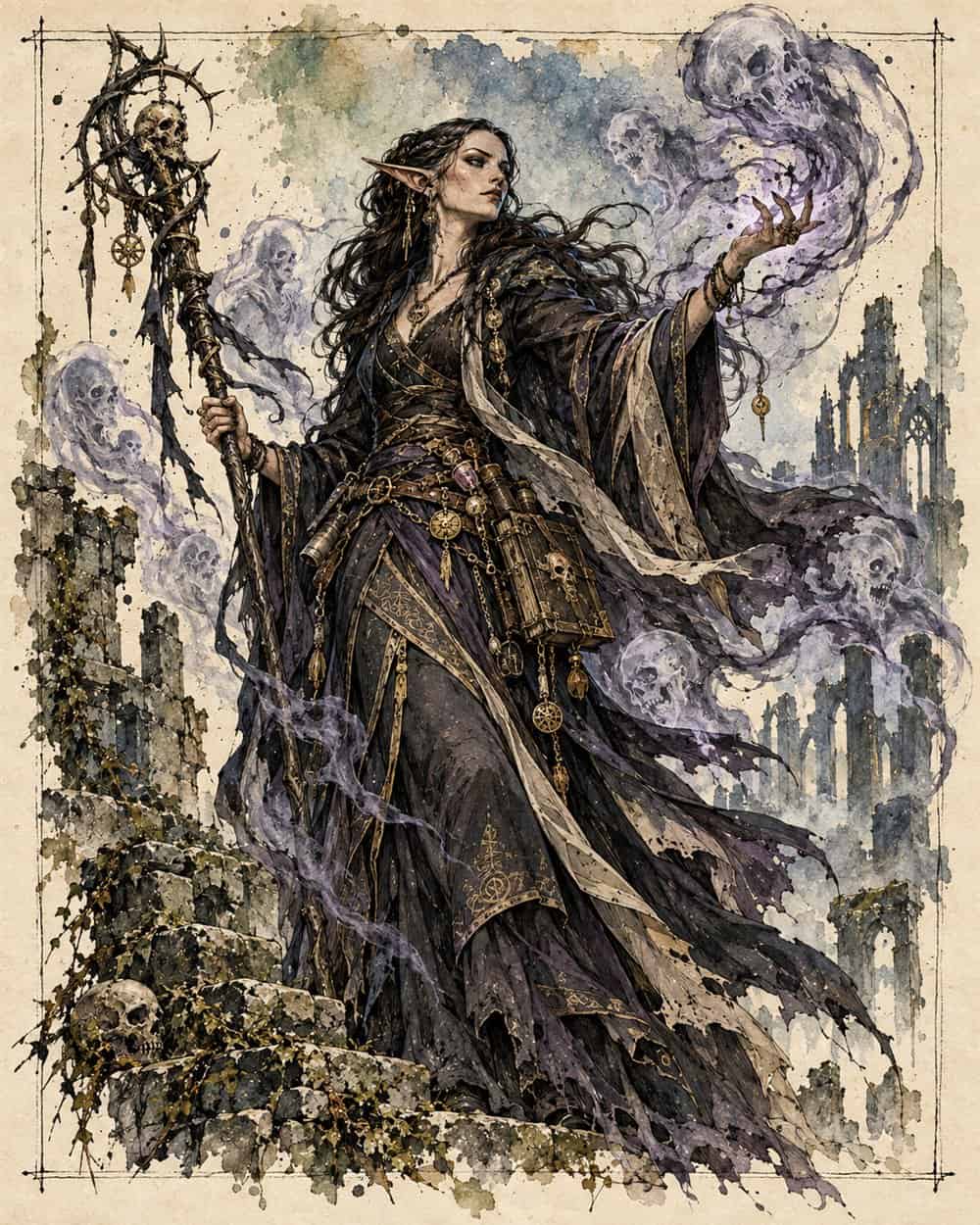
Eryndor’s mouth hardened. “I can name two queens of the fen who might attempt such patience. One loved the old balances and now hates them. One loved growth without tending. They share a face when they are not watched carefully.”

He touched the mud again with two fingers and closed his eyes. A brief frown stitched his brow. “There is a hand in this. Not here. Further west. A woman’s, and long-practiced. The mire calls her mother because the mire calls anything that feeds it ‘mother’.” He opened his eyes. “But the older name under the mud—Cindrel—does not say yes. It only watches.”

“Then we do not cut where the watching is thick,” Alfhild said. “We burn what moved and leave what slept, and we go back before the fen remembers we are on its tongue.”

They retreated in good order, which is to say they tripped where the ground wished them to and did not curse where curses would be heard. The wicket took them in, then closed with a relief that was not quite cheer. Fire still walked the reed tops in ragged lines; smoke flattened and crawled where damp refused it a rope to climb. Men on the wall made small satisfied shapes with their mouths. Behind those shapes lay other shapes they did not let their faces have.

“Bodies?” Blackbriar asked.

“Hounds,” Alfhild said. “And something that thought about being a man and then changed its mind.”

Blackbriar’s eyes did that left-right thing. “We will not stack what thinks.” He looked to Eryndor. “Did the wall listen?”

“Where it wanted to,” Eryndor said. “Where habit has worn a channel. It is enough.”

They built the pyre at the ditch edge. Green wood hissed in the fire’s syntax; the hounds’ flesh resisted like an old stubborn lie and then gave in all at once. The heap crackled and sank upon itself, and the oily smoke rolled low until the wind found a new idea and made a rope of it for the sky.

Harl watched with his jaw clenched until the hinge popped. Alfhild handed him a stick and said, “Stir,” and he stirred because being given something to do is better than thinking. When the worst of the smell had gone and turned to common stink, she took the stick back and broke it cleanly and tossed both halves into the burn. Harl realized belatedly that the gesture meant finished and felt a little less like a child.

When the pyre had eaten what it could, the men broke for the stew pot again, smaller voices under a bigger quiet. Someone strung a line to dry socks and called it a festival. The dogs collapsed into sleep with the full trust of those who believe their masters won for the moment. The bell rope did not twitch. The lanterns stayed where lanterns should be: on hooks within reach of honest hands.

Eryndor sat on the gatehouse step and wrote by the light of a hooded lamp, using his knee for a desk and the night for a witness. He wrote quickly, in a hand that preferred forest paper and the polite scratch of quill on bark, but the slate did not complain; it liked being told things that were not numbers.

Eryndor’s Field Notes
• Lantern phenomena: mimicry of patrol patterns; absence of flame behavior; gliding motion without correspondent footing. Do not follow.
• Mirehounds: interior structure vegetal/ligneous; exudate suggests sap corrupted by stagnant water + necrotic humors; no true blood. Fire advised.
• Root phenomena at scaffold site: nodules emergent; tendrils responsive to contact; avoid cutting—encourages branching . Suggest burning perimeter; leave core undisturbed until counsel sought.
• Presence: feminine will across western fen. Title unknown; Mother used by mire, not necessarily by self. Older name Cindrel sensed but silent.
• Wall runes: OATH responsive; VERDANT cool; MEMORY imperfect but waking. Stones hold better if asked, not commanded.

He paused and looked up at the three runes set above the gate. When the firelight reached them through the smoke, OATH glowed as if a hand had just left it. VERDANT breathed a leaf-cool against the warm air. The awkward MEMORY accepted the light like a cup accepts rain and pretends it planned the weather.

“It will hold,” Alfhild said from the step above, where she had been not-watching him. “Until dawn.”

“Stones do not promise,” he said.

“No,” she agreed. “People do. The stones merely keep us embarrassed.”

They did not smile. Even their attempts at humor had learned to wear mail.

The night thinned. Work found the joints it had left earlier and pulled them tight. Twice more the ditch whispered that it was remembering how to be a road, and twice more men made it forget. The lanterns, having been denied their theater, sulked somewhere beyond the reach of arrows. The root-patch at the scaffold hollow did not pulse again, though a man on the west parapet swore he heard something scratch under the mud like a mouse that had read too many books and wanted larger letters.

Toward the grey hour before dawn, when even brave things reconsider themselves, a bell note decided itself. Not struck; not swung. A single tone, coaxed out of bronze the way a whistle comes from a reed when wind remembers it has music. It moved through the yard and into the bones of the wall and then out over the fen, and where it went, for a moment, the fog thinned like a thought that knows it is being watched.

Blackbriar took off his cap again because some habits are religion if done often enough. “We are accounted for,” he said.

Alfhild closed her eyes briefly and saw under the lids the rune-tree of the Asnen hall—the six old sigils— OATH burning at the center; MIRE low and scorched; VERDANT climbing; WYRD cracked into violet; SPIRIT alive in grain; MEMORY pulsing under glass. She felt then, not for the first time and not with comfort, that she had left one house of worship to live in another, more honest one: a gatehouse where vows were counted by splinters in a man’s palms and the notches on a woman’s blade.

Dawn came grudgingly, stingy with gold. The reeds quit pretending to be knives and went back to being reeds. The ditch looked like a ditch again and not a mouth. The pyre collapsed into itself with an old man’s sigh. Men blinked as if surprised by the existence of color. The cooks brought out loaves so new they tore wrong and tasted like luck.

“We lived,” Harl said, sounding both astonished and deeply suspicious.

“For now,” Alfhild said. “That is the name of victory that does not spoil.”

Blackbriar’s list returned behind his teeth. “We fix what argued,” he said to everyone and no one. “We mend nails. We count arrows. We send two carts for timber. We take the culvert iron off, look at it, put it back on, and pretend it is new so it will behave. And then we sleep in turns because we are not heroes, we are workers, and workers are useful.”

He squinted toward the west, where the fen darkened under low cloud. “It will come worse tonight. Things that are denied their small plan usually bring a larger one to the next appointment.”

Eryndor closed his slate and tied it shut with a thong. “And we will bring a larger answer.”

Alfhild looked past them all, past the wall and the day and the petty mercies of sun, toward the line of the fen where the world’s patience grew teeth. Beneath the fog, somewhere her heart could feel and her mind would not yet name, something breathed that was not beast and not god and not mercy and not wholly malice: a hand in the roots, waiting.

“Let it come,” she said softly. “We have oaths. We have fire. We have names. And if none of those are enough, we have morning, and I have known it to be sufficient for one more day.”

The wind, which had lazed all night, put its shoulder to the smoke and shoved it skyward. The gatehouse timbers popped as they thought of drying. The bell, satisfied with itself, said nothing more.

From the tower’s high room, where dust was constant and prayer occasional, something turned its head toward the inner stair. A shape in the corner—armor hung where no body stood—shifted its weight and decided to be more present in the world. It would be needed soon.

When the sun lifted enough to lance the fog, Kilgarde looked briefly like the drawing of a child who had visited it and come back changed: fewer lines, bolder, a little truer. Men who had been nobody yesterday became the sort of men you ask the time from and believe. Women who had cooked became quartermasters. Boys learned where to put their feet. The ditch behaved.

“Sleep,” Blackbriar said, and the order went down like grain in a throat. Men obeyed and did not feel diminished by it. Alfhild found a corner in the gatehouse where a bale of rope made a good pillow and closed her eyes. She dreamed of the rune-tree again, but this time the SPIRIT rune brightened until it seemed something might step out of it and speak. When she woke, the light outside had changed, and the bell’s silence was the kind that follows speech.

“Up,” someone said softly. Eryndor’s hand on her shoulder was careful and not unkind. “There’s a man in the tower who needs you to hear him while the sun still remembers to make shadows. He wore command once. He has a message from the dead.”

Alfhild sat up, hair rough, throat dry. Her sword lay against the wall where she had set it. It looked like a word that had been correctly spelled and was waiting to be read aloud.

“Elarion,” she said, and did not ask if it was so. The day had lost its appetite for questions.

She rose. The stair waited, conservative as ever. The MIRE of the night was fading behind her. Ahead, in the tower’s stony cool, a different rune put out its hand: VERDANT , the promise that even rot may feed growth if tended with ruthless care.

Chapter IV — The Verdant Oath

Every oath, if buried, grows new branches.

Morning found the tower cool and sensible, as if stone remembered what nights forget. The stair smelled of dust and linseed, the old oil that keeps rope from chewing itself into hair. Alfhild climbed with Eryndor ahead of her and Blackbriar behind, the three of them in a silence that had the shape of a decision not yet said aloud.

On the second landing, sunlight speared a slit and struck the wall opposite, showing the slow drift of motes. A swallow had nested in the crook where a beam met stone; it flicked an eye at them and did not bother to move. On the third, a shutter breathed where someone had chocked it, letting air in enough to keep pitch from sulking. On the fourth, the bell rope hung still and mannerly, its fibers dark with the touch of many hands.

“Here,” Eryndor said, not quite at the top. He set his palm to the inner wall. “You hear it?”

Alfhild pressed her fingers to the stone. It gave back the faintest tremor, not sound but the memory of sound—footfalls arranged by duty, the measured cadence of men who have taught their legs to be clocks. The tower had kept that rhythm. Perhaps it liked it.

Blackbriar leaned past them to see if any foolishness waited on the bell platform. He preferred his ghosts outdoors where he could address them with timber and fire. “Be quick,” he said, but without heat. “The west ditch sulks again.”

The top room was small, a square under the bell’s black throat. Old wax smeared the boards where watch-candles had died and been scraped; the marks looked like maps of rivers that had changed their minds. A rack held armor: breastplates patched with rivets, a helm whose nasal bar had taken a blow and learned humility, a shield with faded paint that might once have been a tree. No body stood in them. They stood by themselves, possessing the strange authority of tools that remember hands.

Eryndor bowed, not deep but long; respect measured in time. “We have come.”

At first the room gave them only its ordinary secrets: dust treaded into patterns by boots that had walked here last night; the gentle rasp of a rope adjusting to air; a fly worrying itself against a pane and then deciding the glass had won. Alfhild shifted her weight so that the boards wouldn’t creak. The silence lengthened to see if they would spoil it.

“Elarion,” she said, and the name found the place it belonged, the way a key finds the bitings of an old lock. The air cooled by a small degree that had nothing to do with breeze.

A figure resolved, not by appearing, but by accepting the invitation to be noticed. No light swelled; nothing glowed. The corner grew definite. A man not much taller than Alfhild stood with arms folded behind him, the posture of someone who had learned long ago that hands on hips were wasted theater. His mail was the color of old rain; his face belonged to a man who had listened more than he had spoken and paid for both. His eyes—when she saw them—were steady and unamazed; they had the weight that comes from looking the same distance whether across a yard or a century.

“Captain,” he said, and the old title sat between them for a breath. “Or do you wear another word now?”

“I wear the work,” she said. “Names have a way of arguing with themselves.”

He inclined his head. “Then we speak as laborers.” He looked to Blackbriar and didn’t blink at the living man’s set jaw. “Reeve.”

“Warden,” Blackbriar returned, granting the word because it cost nothing and bought calm.

Eryndor moved a half-step closer to the rack and traced a finger along the shield’s rim without touching it. “You held this place when I was a boy. I remember the bells when caravans came in through spring rain.”

“We made ourselves heard,” Elarion said, not with pride. “Sound is a way to be present when bodies cannot be enough.”

Alfhild took in the room again, registering the practicalities: the trapdoor wedged with a spar so the bell’s swing wouldn’t crack skulls; the pigeon shelf along the window slit; the ledge where a loaf could be set to keep it out of the rats’ polite reach. Ordinary things. Better company than visions.

“You called me,” she said.

“You answered,” Elarion said. “That is more than most men manage, living or dead.”

“What do you want of us?” Blackbriar asked, getting to the point like a cart finds ruts. “If it’s prayers, you’ll have to take them in the form of decent joinery.”

“Joinery will do,” Elarion said. His mouth learned the memory of a smile and let it go. “We are not here for religion, Reeve. We are here for function. The oath that binds this tower to the living has thinned. It needs binding again—by those with hands.”

Eryndor’s slate was already out, chalk poised. “What kind of binding?”

“The kind men do when they say we will and then continue to. The kind that rots if it isn’t used.” He glanced at Alfhild. “You remember the rune-tree.”

She saw it again—the six sigils in the Asnen hall, OATH burning at the center, VERDANT curling upward like green thought, MEMORY pulsing beneath the glass. “I remember,” she said.

“The oath here was planted when the first stones were set,” Elarion said. “It was watered by watch and work. It grew. When the walls fell the first time they grew again around it. When the men inside failed, the oath did not cancel itself; it became embarrassed.” His tone did not change. “We borrowed it. We wore it until the living remembered they had shoulders.”

Blackbriar’s jaw clicked left, then right. “Do you want us to speak words? I’ve no patience for fancy ones.”

“Plain words hold best,” Elarion said. “But more than speech, I want the living to decide that the tower is their work, not their superstition.” He lifted his chin toward the rack. “Put those on the backs of men who sweat. Hang the bell on purpose. Scratch the runes where the stone condescends to keep them. Then hold until dawn.”

“That we already do,” Blackbriar said, almost offended. “We mend and we pitch and we hit what reaches up. We held last night and the one before.”

“And you will hold tonight,” Elarion said. “But holding is not the same as binding. Binding ties the holding to tomorrow.”

Alfhild looked at the rack again. The armor wasn’t ceremonial; it was repairable. She ran a thumb along a leather strap; it flaked a little, wanting oil. “You want us to wear the oath,” she said.

Elarion’s eyes warmed by a half-shade. “Yes.”

“Who names it?” Eryndor asked. “Words make grooves—sometimes they steer the cart where you did not mean to go.”

“You name it,” Elarion said, and when Eryndor half-raised a hand in apology, the spirit added, “Or you refuse to and let the work do the naming. I am not here to build a religion under your feet. I am here to keep the gatehouse from learning to forget.”

They stood with that for a moment, the way men stand with a board to consider where to cut so the piece will fit the house and not the drawing. Outside, hammering resumed on the west parapet; someone laughed once, too loud, at a joke that did not need so much laughter, then settled.

“Why me?” Alfhild asked finally, because the question had been humming behind her collarbone and would not shut itself off without a ready answer. “You could have spoken to any brave fool in mail. Why ask the exile?”

Elarion’s head tilted as if the line of her shoulder had presented a problem worth solving. “Because you are already bound to a larger thing,” he said simply. “A man who ties a knot for the first time takes pride in the knot. A man who has tied many knots takes care of the rope. You will not tire of the rope.”

She did not let the words strike too deep. Praise is a sweetness that makes men slow. “What is the price?”

“The usual,” he said. “Trouble in your sleep. A tendency to be correct when it is inconvenient. Certain small kindnesses you will try and fail to explain to yourself.”

Blackbriar snorted. “She had those already.”

Eryndor, who had expected grander costs, relaxed despite himself. “And in return?”

“In return,” Elarion said, and for the first time his voice thinned like something being drawn through a tight place, “you will not be alone at the breaking place.”

They let that be true without dressing it in more words. Alfhild put a palm to the inner wall where the stone stayed cool even as light warmed the slit. Under her skin the tower hummed, faint as sap in a tree that had decided to wake early. VERDANT sat in that hum—not green, not leaf, but the idea of continuation, the stubborn plant that grows from mortar because no one told it better.

“What do we do first?” she asked.

Elarion nodded at the shield. “Carry it where hands can find it without asking whose it was. Oil the straps. Put a man in the breastplate who is not proud of how he looks in it. Teach the bell to speak on cue. And scratch the runes with no theater.”

Eryndor already had his knife out; he tapped the wall near the trapdoor, listening for temperament. “Here,” he said. “The grain of the stone is willing.”

Blackbriar shifted onto his heels and back. “I’ll send for oil and a man with decent hands. I have two old watchmen who can walk the bell like a tired horse. As for the runes—” He eyed Eryndor. “Make them short. We’ve no patience for poetry.”

“They are already short,” Eryndor said, and set the first line of OATH with a chisel’s blunt insistence. The stroke sounded like good sense.

They worked for an hour without fuss. Oil found leather; rivets reconsidered and yielded to persuasion. The bell rope was unjammed, swung twice, and then chocked again in a way that would release with a single pull. Eryndor set OATH cleanly, VERDANT in a modest spiral that preferred function to show, and MEMORY in the board at eye level where watchmen would rest their fingers and unconsciously teach the wood to be a tally of days.

When it was finished, nothing glowed. The tower felt exactly as it had—only more itself.

“That’s the look of it,” Blackbriar said, satisfied. “Work that pretends not to be proud.”

Elarion regarded the marks with the specificity of a carpenter checking his joints. “That will do.”

Alfhild buckled the mended shield to the rack with a strap that no longer cracked. “What happens when we fail?” she asked, with no melodrama in it. The sky was the color of pewter; failure was a plausible weather.

“Then we do not make it morning’s problem,” Elarion said. No comfort there; only instruction.

A runner’s feet clattered on the lower stair, bringing up the day’s inevitable interruptions. “Reeve,” the boy said, skidding to a respectful stop, cheeks bright from cold. “North bastion’s sunk a thumb; the wedge won’t hold. Cart’s ready for quarry.”

“Good,” Blackbriar said, already turning, pleased to have something strictly mortal to argue with. “Eryndor, with me. Alfhild—nap while the sun is feeling generous. If you fall over on the parapet I’ll have to lie to the men and I haven’t breath for it.”

“I’ll sleep,” she said, though she knew sleep would come like a bargain with too many clauses. She looked once more at Elarion. “Tonight, then.”

“Tonight,” he agreed.

They left the tower ordinary: shutters chocked, bell patient, armor oiled, runes shy and present. On the stair, Eryndor glanced back and almost stumbled when he saw the breastplate’s shadow shift as if someone had set a weight into it. He decided to call it the day’s trick of light and did not test the decision with a second look.

Outside, Kilgarde went on being a place. Men yoked themselves to a cart and found it lighter for being shared. A woman measured out barley with the accounting a soldier’s wife keeps in her bones. Harl slept awkwardly on a bench with his billhook under his arm, mouth open, too young to know he snored.

Alfhild lay down in the lee of the gatehouse where the wind did not reach. The rope bale made a better pillow than most beds in noble houses. She put her forearm over her eyes and let the dark behind the skin fill with the shapes of work done right. For a time the tower’s hum braided itself with her breath.

When she woke, the sun had moved the length of a spear across the yard. The west wall, newly wedged, looked honest again. Blackbriar’s list had grown and shortened in the way lists do when men actually touch the things written there. Eryndor stood at the gate stones with a boy, showing him how to clean mortar from a chisel with leather and not with his thumb.

“Eat,” Blackbriar said, handing her a heel of bread shoved into a fist-sized stew. He didn’t ask if she had slept because the answer wouldn’t change the next order. “We set the watch by the new marks at dusk. You take the bell when the fog decides it deserves it.”

She chewed and nodded. The stew had remembered the pepper. The bread tore wrong. It was all comfort.

Dusk arrived without theatrics, a dulling of edges, a returning of the fen’s bad habits. Men moved to their places with an economy born of the previous nights’ mistakes. Harl took the north crenel with two old archers and did not brag. Eryndor set his slate aside and took up a spear because sometimes a scholar chooses the right instrument. The bell rope hung within reach, chock loosened.

Alfhild stood under the runes Eryndor had cut, palm resting briefly on VERDANT as one might touch the shoulder of a friend when passing. She felt nothing except the slight difference in temperature where new stone met old. It was enough.

“Lanterns,” someone said, without panic. The reeds obliged by recalling how to glow. Shapes moved with the patience of things that have learned not to be hasty. The culvert grille muttered a complaint and then held its tongue.

Blackbriar’s voice went along the wall with the sober confidence of a line drawn with a straightedge. “Now we work.”

Alfhild looked up once, toward the bell. In the room under it, where armor stood by itself and did not boast, something shifted to make room beside it. Not a light. Not a miracle. Only a presence like the air in a forge just before the iron is ready.

She wrapped her hand around the bell rope. It felt like rope: tar, hemp, the ghost of sweat. She pulled, not hard, not with ceremony. The bell spoke a single clean word into the night. Men lifted their heads to it and felt taller by an inch that no one could measure.

“Hold,” she said—no shout, no theater—and the word went down the wall and through the tower and into the ditch and out across the reeds, where the fog—briefly—remembered the shape of fields and the shape of roads and the shape of men.

In the pause that followed, Eryndor’s fingers found the cut lines of OATH and MEMORY and then came back to VERDANT , as if to say: grow anyway . The tower agreed in the only language it owned. The night, having been told where to stand, accommodated them for a while.

They held. And the work—right-sized, unglamorous, exactly theirs—bound itself to tomorrow.

Chapter V — The Bell and the Fog

When fate forgets its road, we carve another in fire.

Dusk came without edge. It pooled instead, filling low places first—the ditch, the old cart ruts, the hollows where boots had learned to turn sideways. By the time it reached the wall it had decided to be fog as well, and the two worked together, patient clerks writing the night into the ledger of Kilgarde.

Men took posts by habit. Blackbriar checked the wedge at the north bastion and did not scold the mason for over-pride in a good fix; praise spent wrong is as dangerous as rot. Eryndor walked the inner face once with a hand on the stone and once without, as if testing whether the tower preferred conversation or reserve. Harl arrived with his billhook and a piece of bread pocketed for later and tried to stand as if he had been standing all his life.

Alfhild wound the bell rope around her wrist and unwound it again, feeling the tar bite her skin and leave its friendly tack. She looked up past the beam and the trapdoor to the throat of the bell and thought, not of miracles, but of metal: how long it had slept, how often it had been asked to speak, the patience of bronze with human indecision.

The lanterns came late. When they did, they did not glide; they hung. They arranged themselves in a pattern across the fen that was not a line or a curve but something between—a half-remembered letter in an alphabet no one owned anymore. They did not flicker. Wind touched them and changed its mind.

“Hold the gate,” Blackbriar said, voice even. “Let the night explain itself first.”

It did not. Instead the bell breathed.

Not a toll. Not yet. A breath, like a big slow chest reminding itself of the trick. The rope quivered in Alfhild’s hand—a cat’s tail testing mood. She did not pull. Across the parapet men lifted their chins a degree as if taller men had come to stand behind them and offer shoulders.

Eryndor exhaled through his nose, the sound of a man agreeing with no one in particular. “If it wishes to speak,” he said softly, “let it be the first to say its name.”

The second breath came heavier, and with it the fog altered color—only a shade, from pewter to something with violet leaning under it, as if night had a bruise. The lanterns shifted, not in place but in meaning, and the letter they had been pretending to form became a road, and down that road shapes began to move.

They were men-shaped without being men. Not the slick, joint-slow grotesques that the mire coughed up to imitate hunger, nor the jointless grace of lantern-tricks. These walked like soldiers who had learned to measure their feet against the beat of a drum and then had to keep walking after the drum forgot them. They caught no torchlight. They cast no shadow. Their ranks thinned when fog thickened and filled again when it thinned, like handwriting corrected.

“Shades,” someone breathed. No one rebuked him. Names were a kind of brace.

Alfhild did not raise her sword. She set her palm to OATH where Eryndor had cut it by the bell stair, then to VERDANT, then to the crooked MEMORY, as if counting beads. The stone did not warm. It answered, instead, with that small consent craftsmen know—the joint seating, the door finding its latch without complaint. She nodded once, to herself, to the wall, to whatever watched.

“Make ready,” Blackbriar said. “No arrows loosed without order. If this is theater, let it be theirs for a while.”

The bell chose its own time. The rope tightened and slid, and Alfhild, hand already on it, gave it what it wanted—no flourish, no priest’s arm, only the allowed motion. The clapper kissed bronze and drew from it a note that had the clean cruelty of a winter morning. It stood in the yard and in the bones and in the ditch and then strode out over the fen where it walked between the lanterns like a tall unhurried man who knows he will arrive.

The shades checked their pace, not as if surprised, but as if remembering a choreographing they had not dared use without invitation. They arranged themselves not at the ditch, but short of it, in a line that matched the wall’s line, as if to say: we will take our place when you take yours.

“Warden,” Blackbriar said into the air without sarcasm, “if that’s your hand, I thank it.”

Elarion answered without becoming dramatic. “We have been walking the wall in our fashion,” he said. “The bell is a rope we can hold.”

Alfhild spoke low. “We saw lanterns make letters and roads. We saw roots think. Tonight the dead keep watch. Where in this is the line, and whose is it?”

Elarion’s voice was not at her ear; it was in the weight of the parapet beneath her palm, in the way stone denies panic. “You draw the line,” he said. “You draw it with work and with limits. We keep to your line because you have bodies to be wrong with, and being wrong is a privilege of the living.”

The shades lifted their heads together, a small and brutal discipline. Across their front, in the pauses where fog decided not to be, Alfhild thought she saw details: the dent in a nasal bar, the way a man’s shoulders settle when he has accepted that his life is rope and watch and soup and orders, the notch in a shield’s rim where luck took a bite and spared a man’s wrist for another hour. They did not look at the living with hunger. They looked with recognition.

“Signal when you wish us,” Elarion said. “We will not choose the hour. That was our error once.”

“Your error?” Eryndor asked, a scholar’s reflex.

“We loved the bell more than the gate,” Elarion said. “We listened to the sound and forgot to oil the hinge.”

Blackbriar grunted, and the sound had approval hidden inside it. “A religion I can use.” He lifted his hand. “Two volleys, high. We measure distance.”

Arrows climbed, argued with damp, and came back with information written on their fletchings. The shades did not flinch. The lanterns tilted, interested, and settled. The fog thickened at the culvert and then thinned again with convincing shyness.

Alfhild slept and did not sleep with her eyes open. She watched the wall. She felt the bell’s next pull before it moved—a sympathetic ache in tendon and memory. She thought, sharply, of the rune-tree in the Asnen hall, six marks that had taught her as a child to name what could not be owned. WYRD had been the thin crack across the higher boughs—mystery, fracture, the mercy of not knowing. She put her thumb on the place where Eryndor had cut WYRD into the stair’s post—he had tucked it there, small, as if acknowledging it but not encouraging it—and the wood felt like any wood. That was its miracle.

“Wicket,” Blackbriar said, and the rope men gathered, hands finding hemp, eyes finding each other’s breath. “Not yet,” he added, because command is a sequence, not a mood.

The fog leaned, and the ditch forgot how to be a ditch and tried to become a corridor again. Lanterns slid to mark its margins. A hound’s back showed and sank. Something taller followed and did not sink, thinking perhaps to brazen through the world’s rules. The grille at the culvert creaked a word the living could not translate and then decided to hold its tongue.

“Now,” Blackbriar said, and Alfhild pulled the bell—not to scare ghosts or hearten men (though it did both), but to keep time. The note smote bronze and made a road for feet to agree upon. The wicket jumped; four men and a fifth to count the living went through, and the fog accepted them as it must accept anything done decisively.

The shades stepped as well, not to leave the fen—no law allowed them that—but to take up positions exactly opposite each living man, like reflections that know they are reflections and honor the glass. Harl, seeing his own shape doubled in grey, nearly laughed for terror and relief.

“Do not look into them,” Eryndor murmured. “Look along them.” He spoke as one corrects a student’s hand—gentle, quick, confident that the correction will catch.

Where the ditch ended and marsh began, the night’s plan showed itself. Not wolves, not men, not rootlings. A heave of earth as if a huge back had shrugged under it; then a splitting, not of ground but of idea, and out of the split something climbed. It was jointed like a man but fuller at the long bones, as if layers had been grown there with poor patience. Its head turned without neck, like a flower tracking sun; where eyes might have been, water held perfectly still. Threads hung from its belly to the mud, searching.

“Back,” Alfhild said, not to retreat but to find the line. “Here,” she added, marking the distance with her voice the way a carpenter marks boards with pencil. “Here we say yes. Beyond it we say no.”

The thing wavered, not from doubt, but because doubt lived in the air like heat and worked on everything. Behind it lanterns tipped as if breath had reached them. The shades in front of the wall lifted their shields in unison; no sound came of that, but the motion set men’s wrists to the same angle along the parapet.

“Fire,” Blackbriar said, and cressets went in calm arcs—not hero’s throws but worker’s. Flame met damp with the rude kiss of old friends, sputtered, caught, insisted. The thing’s threads tightened, burned, shrank to black hairs that curled and became nothing. The head turned to consider this lesson and found no teacher it could punish. It tried to step forward; it found the bell-note instead and failed to decide which law to obey.

Elarion’s presence pressed, not like a hand but like a brace slid under a beam. “Now,” he said, and the shades moved in the same instant the living did—not to occupy place but to name it. For a breath, the wall existed twice, once in men’s bodies and once in their memory. The space between those two walls was too thin for the thing that had climbed to find its balance. It leaned. It failed. It went to its knees in mud that decided to be mud after all.

“Hold,” Alfhild said, not casting the word to the line but laying it down along it, and men accepted the gift of not having to improve upon sense. Arrows found joints that had been added in the wrong order. A spear learned what it could do. The bell said one more word, and the shape believing itself a man cracked along the admission.

It did not die like an animal. It unmade itself back into its arguments—root, water, patience, hunger—and those arguments fell out of agreement. The lanterns withdrew to the pattern they had kept before; a road un-drew itself. The fog considered the wicket and chose to pretend it had never noticed the hinge.

When it was over, the ditch looked like its task again. A single thread remained on the sill, too small to matter, and wrinkled as if offended by air. Harl would remember it for a year and no one would understand why.

They closed the wicket and made busy not to be proud. Pride is a slippery rung. Eryndor went to his slate and wrote with a hand that preferred to shake and did not. Blackbriar walked the line and named every third man by name as if they were meeting in a market. Alfhild stood by the bell and let her ribs find the gearwork of ordinary breathing again.

The shades did not vanish, exactly. They stepped back to the far side of the ditch and became less interested in detail. A man might have believed he had imagined them if not for the way his hands held his spear—lower, sensible, the grip of someone who trusts a drill because it rescued him once.

Elarion said, “Until dawn.”

“Until dawn,” Alfhild answered.

The night did not give up its malice, but it lost its novelty. Twice more the lanterns tried to make roads; twice more the bell reminded them that roads into Kilgarde require tax. Once the culvert iron squealed like a stubborn boy and then behaved as if praised. Once a hound remembered to make a sound and chose not to because the sound would have admitted pain and pain suggests a self, and the mire hates selves—it prefers masses.

Sometime in the hour before morning, when even brave men’s feet want to stop being feet and become boards, Alfhild leaned her head against the stair-post where WYRD had been cut small. She expected nothing. What she received was a memory—hers, not the tower’s—of snow falling into her hair outside the Asnen hall and the cut braid warm in her hand before the fire smoked it toward the roof. She did not want this then. She took it anyway. Memory is not a servant; it is a colleague.

She opened her eyes. The rope waited, steady. The bell wanted one more word and then would be content. She gave it that and no more.

Dawn came with scorn for spectacle. Grey first, then something like tin polished with a sleeve, then—very briefly—gold where a reed bent with the right humility. Men stretched and became men again instead of posts with thoughts. The shades lined once more opposite and gave a soldier’s nod that could have been an itch in the fog and then were gone to wherever duty keeps its records.

Blackbriar took off his cap because the habit was now older than sleep. “We held,” he said. “We bind tonight.”

Eryndor shut his slate and patted the wall as if it were a mule that had done a day’s work and deserved a carrot. “The runes answered without light,” he said. “That’s the best they can do for us.”

Alfhild looked down at her hands. Tar ridged the rope-bite. Pitch had tattooed the web between thumb and finger with a smear that would take days to leave. She liked the look. It meant the bell had spoken in a language her body understood.

She raised her gaze to the fen. Far off, further west than the limit of arrows and patience, the fog had a different quality, not a bruise now but a pulse. Not a light—something like attention. She felt it feel them, and in that mutual knowledge there was the promise of another road that would have to be cut, not with stone, but with roots.

“Soon,” she said under her breath, and did not add Hollow Watch. Names have a way of hearing themselves when you do not mean them to. She turned her back to the fen and set her palm to OATH and then VERDANT and finally to MEMORY, and the stone answered in its quiet, decent manner, which is to say: I am here because you are here; be here again tonight and we will continue this work.

The bell dreamed no more. The fog sulked away from the ditch and remembered to be dew. Kilgarde woke into the same day it always woke into and kept the difference to itself.

Chapter VI — Hold Until Dawn

We are echoes only until the vow is kept.

Morning did not arrive; it was coaxed.

The fog did not lift all at once but in obedient folds, the way a blanket is drawn back from a patient who has agreed to wake. Sound came first: the hiss of kettles, the little gossip of ropes, a cart axle remembering its song. Then smell—smoke that had chosen to forgive damp, bread learning to brown. Light was last; it hesitated, looked over the wall, and then entered as if embarrassed.

Alfhild stood by the gatehouse, head bare, hands quiet. She had not slept. The tower behind her hummed with the modest vanity of work well done. Every strike, every burn mark, every patch of new mortar had its own opinion, but all agreed on one fact: they had held.

Blackbriar moved through the yard with a limp that he refused to name and counted heads without using numbers. Eryndor knelt in the mud and chalked small notes on the edge of his slate: bell—responsive; wall—attentive; men—tired but adequate. Harl sat on the steps and cleaned the mud from his billhook with the patience of a farmer considering seed.

Then the bell moved.

Only once. A tremor, a breath. It was not the wind. Every man turned toward it and then looked to Alfhild, because command had found her and made itself at home.

She went up the stair. No one followed. The boards felt alive, not in the way of enchantment, but in the way of tools that know they are needed again. At the top landing the air had weight. Dust spun in slow deliberate orbits. The armor on the rack was no longer hollow; something stood in it.

He faced the slit of the window. Sunlight struck the rim of his helm and made a quiet crown of reflected worklight. When he turned, his features were the same and not the same—drawn from memory’s clay rather than flesh’s.

“Captain,” he said, voice like the echo of a hammer down a long corridor.

“Warden,” she answered, because titles are bridges.

“You held.”

“We did the work.”

He nodded, accepting both the words and the refusal of ceremony. “Then I can stand down.”

“You don’t look the sort to rest.”

A small smile tugged at the scar that wasn’t a scar. “Not rest. Reassign.” He gestured toward the window slit. Outside, where the fog thinned, shapes stood along the parapet—thin as reflections on water. “The watch is yours now. Ours will walk with it, but only as shadow.”

“They’ll listen to me?” she asked.

“They already do.” He stepped closer. The air around him smelled faintly of oil and cold iron. “You made the oath green again. You reminded the stone that holding is a kind of growth. That is all command is.”

She reached out; her fingers stopped an inch from his shoulder. The air there was solid enough to argue but not to win. “What happens to you?”

“We keep walking,” he said simply. “We are memory; memory doesn’t end, it distributes.”

He looked down at her left hand, still stained with tar from the rope. “That will never wash completely away,” he said, not unkindly. “That’s how the world signs its officers.”

Below, the yard came to attention without knowing why. The dogs raised their heads and then put them down again, reassured. The bell began to hum softly, the way a voice hums when it has found the right key but not yet the song.

Elarion went to the rope. “Once more,” he said. “To mark the change of shift.”

She nodded and pulled with him. The note that came out of the bell was neither command nor warning; it was acknowledgment. Men straightened. The wall’s grain seemed to tighten. In the yard, Eryndor looked up from his slate and knew he would never again write the word stone without hearing it breathe.

When the sound faded, Elarion was only half there. The armor stood on its own, polite, ready. His voice came from it without mouth or lungs. “You will go west when the time asks,” he said. “The tower will remember your step.”

“West,” she repeated, tasting the word like a direction she already knew. “What waits there?”

“Another oath. Another watch.” He paused. “You will not like it. That is how you will know it is yours.”

Light reached through the slit and laid itself on the runes Eryndor had cut: OATH, VERDANT, MEMORY. Between them, in a space no one had carved, a faint line appeared—thin, cracked, violet—the mark of WYRD. It had come of its own accord, as if the stone wanted to keep its collection complete.

Alfhild touched it with the back of her hand. The vibration was the same as the heartbeat she carried.

She turned to the stair. “We’ll hold.”

Elarion’s voice followed, already distant. “Until dawn.”

By the time she stepped into the yard, the fog was gone. Men looked ordinary again, which is to say miraculous. Blackbriar was arguing with a carpenter about the price of nails; the carpenter was winning. Harl fed the dogs bits of bread. Eryndor was explaining to no one in particular that the runes had adopted a new sibling and would need cataloguing.

Alfhild walked to the gate, set her palm to the hinge, and felt it hum faintly under the sun. Beyond the ditch the road turned west, a pale scar through reeds that whispered her name in a language that had not yet been invented.

She adjusted her cloak. The metal at her belt had the same dull shine as the bell’s rim. Behind her, the tower breathed once, settling into a comfortable watch.

“Hold until dawn,” she said to the air.

The air, remembering how to answer, whispered back: And beyond.

End of The Siege of Kilgarde

Epilogue — Memory

The road west was empty.

Grass had begun to grow through the flagstones, pale and thin as candle smoke.

At the edge of what had been Kilgarde, the air still carried the faint iron taste of fire, though the walls themselves had long since settled into moss and silence.

A party of scholars stood in the shadow of the gatehouse, their boots sinking into the softened ground.

They had followed the Silver Trail for days—tracing lines on maps that had yellowed before their births—and now they had reached its end.

“Is this the place?” asked one, brushing dew from his sleeve.

“It is,” said the elder among them. “The stones here hum, if you listen rightly.”

They fell silent. Somewhere beneath the earth, a low vibration answered—a resonance not of wind nor water, but of something older remembering itself.

The youngest scholar knelt, pressing his palm to the stone.

“It’s warm,” he said, surprised.

The elder smiled faintly. “Work holds its heat long after hands are gone.”

Inside the ruin, they found remnants of order: runes scratched into wall fragments, fragments of armor laid as though for cataloguing, and the faint outline of a bell—its clapper missing, its body cracked but standing.

When the wind moved through the tower’s ribs, it made no sound, yet each of them felt the shape of one.

They copied what they saw. They measured, sketched, and wrote until the sun slanted low.

By dusk, their journals were filled not only with symbols, but with a sense of being watched—not by ghosts, but by the place itself, attentive and patient.

At last, as they prepared to depart, the youngest looked back toward the west where the marsh began.

The path glimmered faintly in the dying light, as though a thin vein of silver ran beneath the mud.

He thought he saw footprints, too faint to trust—one set, heading toward the horizon.

“What was her name?” he asked.

The elder paused. “Names fade. What matters is the work.”

He closed his journal and tied it with cord.

“Write it down,” he said quietly. “If we forget, the oath fails again.”

The wind stirred. The bell gave no voice, but the air seemed to breathe.

The scholars turned east, leaving the ruin to its hum.

Behind them, the last light touched the broken tower, and for a heartbeat—no more—it shone as if the stone itself had remembered dawn.

What is remembered may rise again.

The scholars’ campfire faded behind the hill.

Far to the west, where the marsh began again, fog gathered among the roots of forgotten trees.

In that stillness, the air trembled—as if the world itself drew a slow breath—and somewhere unseen, beneath the mire, a single bell tone answered.

The watch was not ended. It had only changed its keepers.

Latest in the Saga

The weekly chronicle

Episode One · Forthcoming

Season One

The first episode is on its way

Each week, a new chapter of the saga arrives as a short film — scenes from the town, the roads, and the lands beyond, told in illustration and voice. The first episode is being prepared now.

Watch · arriving soon

‹ Previous

Next ›

Episodes are released weekly, gathered here into a full archive by season.

The Cast

Those who stand at the crossroads

The saga follows a handful of figures whose paths cross in Kilgarde — drawn from the town, the holds, and the groves beyond.

The Principal Character

Alfhild

Asnen of the Highest Grove

First among the figures of the saga — an Asnen of the Highest Grove, known in Kilgarde as the Oath-Torn. Her story runs through the heart of the chronicle.

Garran

Human Freeblade

Brokka Flint

Dverren Warrior

Maelin Voss

Armoured Warden

Rhea Thorn

Archer

Saelith Veyn

Mage

Beyond Kilgarde

The lands beyond

Kilgarde is one point on a wider map. The roads from its gates run into country that is older, wilder, and not always friendly.

The known world, as the mapmakers of Kilgarde draw it

The High Scar

A hard line of mountains to the north, where the stone remembers older holds than Kilgarde.

The Northern Holds

Fortified seats of the north, keeping their own law, their own winters, and their own silences.

The Asnen Groves

Eastward rise the high groves of the Asnen — seldom entered, long watched, and older than any road.

And at the meeting of the roads stands the town itself — the heart this chronicle returns to.

Powers and Conflicts

The forces that move the world

Kilgarde belongs to no single power. Several contend for it — some in the open, others never showing their hand.

I

The House of Marks

Keepers of debt and ledger. In Kilgarde, what is owed is written down — and what is written down is enforced.

II

The Red Tithe

A levy taken as readily in blood as in coin. Where the Red Tithe is named, few argue twice.

III

Skarn

A power of the wild places, patient and cold — the thing the roads were built to keep out.

IV

Veyr

Older than the town and little understood. A name spoken carefully, and not often.

The Chronicles

History, legend, and lore

Beneath the saga lies a deeper record — the histories of Kilgarde and the lands around it, the legends its people tell, and the lore that holds it all together.

I

Histories

How Kilgarde came to stand at the crossroads, and who has held it since.

In preparation

II

Legends

The tales told at the Oathhouse fire — of the High Scar, the groves, and the things the roads keep out.

In preparation

III

Lore

The peoples, powers, and names of the world, gathered in one place.

In preparation

The Continuing Story

Follow the saga from the beginning

A new chapter of Kilgarde arrives each week — its people, its places, and the slow turning of the world beyond the gates. Leave word at the Oathhouse door and we’ll tell you when the next one is told.

Thank you — we’ll send word when the next chapter arrives.

A quiet letter when a new chapter is published — nothing more, and easy to leave at any time.